
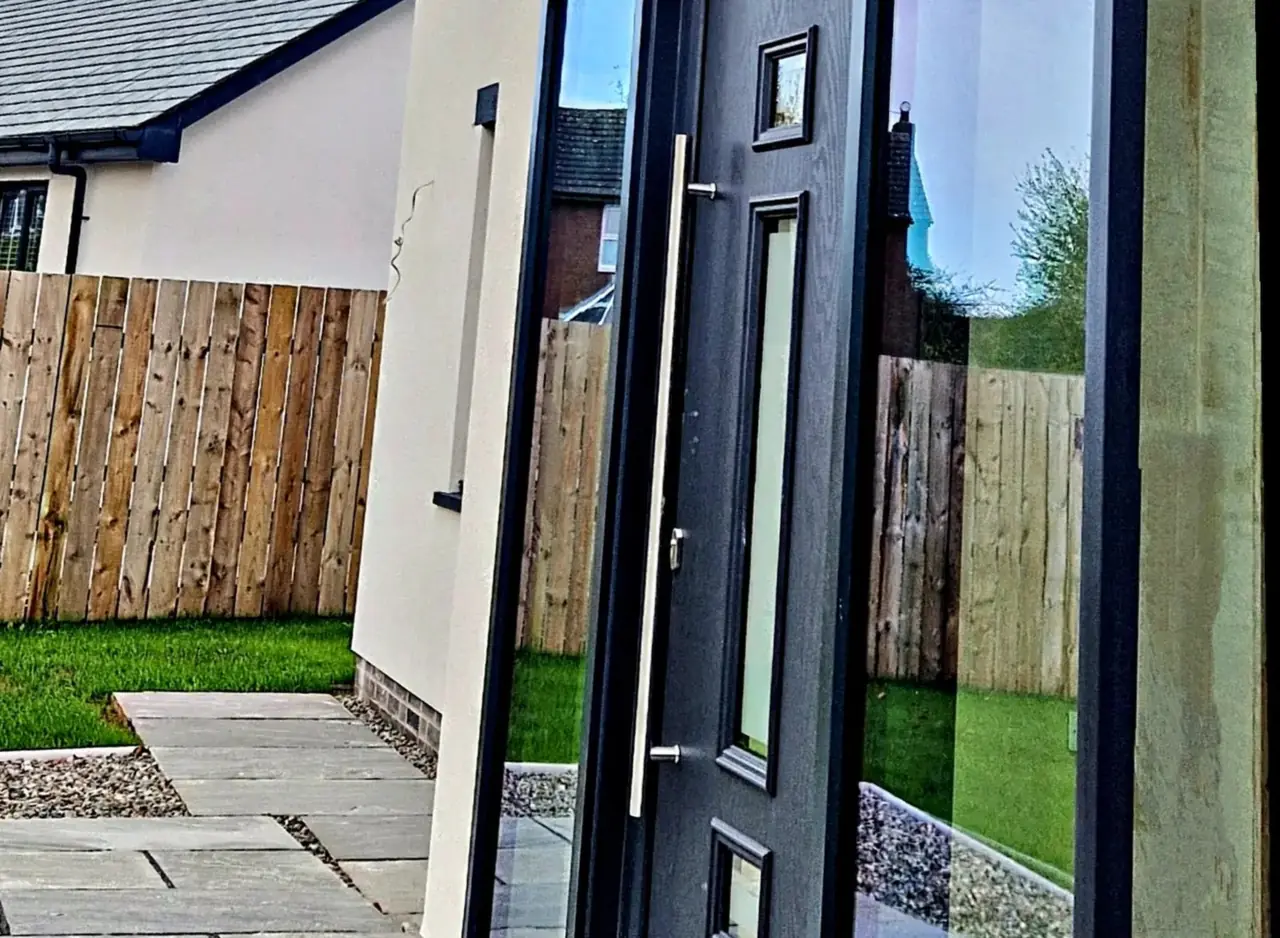
What "smart-home ready" actually means on a frame
Smart hardware bolts onto the same aluminium frame you already spec. The frame does not become smart; the locking gear, sensors and motors fitted into it do. The practical question is whether the profile, the reinforcement and the cut-outs leave room for what the installer or homeowner wants to add later.
Three things draw current or need a cable path: motorised locks, contact sensors and any automated opener on a rooflight or window. Each needs a chase, a hinge-side cable transfer or a battery housing. Decide this at order stage, because routing a cable through a sealed thermally broken profile after fabrication is not a job anyone wants.
Most demand we see is retrofit-friendly: smart cylinders and door sensors that fit standard euro profiles and PAS 24 multipoint locks. Keep the hardware swappable and you keep the upgrade path open without re-specifying the door.
Locks, sensors and the security standard
Security hardware on doors and windows is covered by Approved Document Q and the PAS 24 test routes. A motorised or smart lock does not change that obligation. The doorset still has to meet the security performance it was specified to, and a digital cylinder must not be the weak point that undermines a PAS 24 route.
NPSA guidance does not recommend digital locks on external residential doors. Treat a smart lock as a convenience layer over a compliant multipoint mechanical lock, not a replacement for it. Our aluminium entrance doors and bifold doors carry standard euro cylinders and multipoint gear, so the certified mechanism stays in place while the smart layer sits on top.
Contact and shock sensors are low voltage and sit in the rebate or on the frame. They do not affect the weather seal if positioned correctly. Confirm sensor placement before glazing so you are not drilling a finished frame on site.
Ventilation: do not design out the trickle vent
Smart ventilation and humidity sensors are useful, but they sit alongside the Building Regulations, not instead of them. Under Approved Document F in England, most replacement windows and doors require background ventilation, and trickle vents are the usual way to provide it. A smart actuator that opens a window on a timer does not satisfy that background ventilation duty on its own.
Spec the trickle vent into the head of the frame at order stage. Retrofitting one to a glazed unit is messy and can compromise the head detail. Listed buildings and some conservation-area work are treated differently, so check the specific job before assuming the rule applies.
For automated purge ventilation as well, our roof lanterns and flat rooflights can be specified with electric openers. See energy efficiency for how background ventilation and thermal performance work together.
Power, cabling and who fits what
Mains-powered actuators and openers need a fused spur and a competent electrician. Battery smart locks and sensors do not, but they need an access plan for changing cells. Decide which model you want before fabrication so the frame is drilled and prepped once.
Hinge-side cable transfers are the cleanest route for powered door hardware. They keep the conductor protected and hidden, but they have to be designed in. Tell us the hardware schedule and we cut and reinforce the profile to suit, rather than leaving the installer to improvise on site.
Keep the trade and the third-party smart-home integrator talking. The aluminium fabricator controls the cut-outs and reinforcement; the integrator controls the wiring and software. Gaps between the two are where most retrofit problems start.
Spec it once, with the schedule in front of you
Smart hardware is only as good as the prep behind it. Settle the lock type, sensor positions, opener loads and cable routes before the profile is cut, and the frame arrives ready for the integrator with no on-site drilling.
Trade customers: send us the hardware schedule and request a quote so we can reinforce and machine the profile to suit. Homeowners should find an installer who can coordinate the frame, the security spec and the smart layer as one job.