
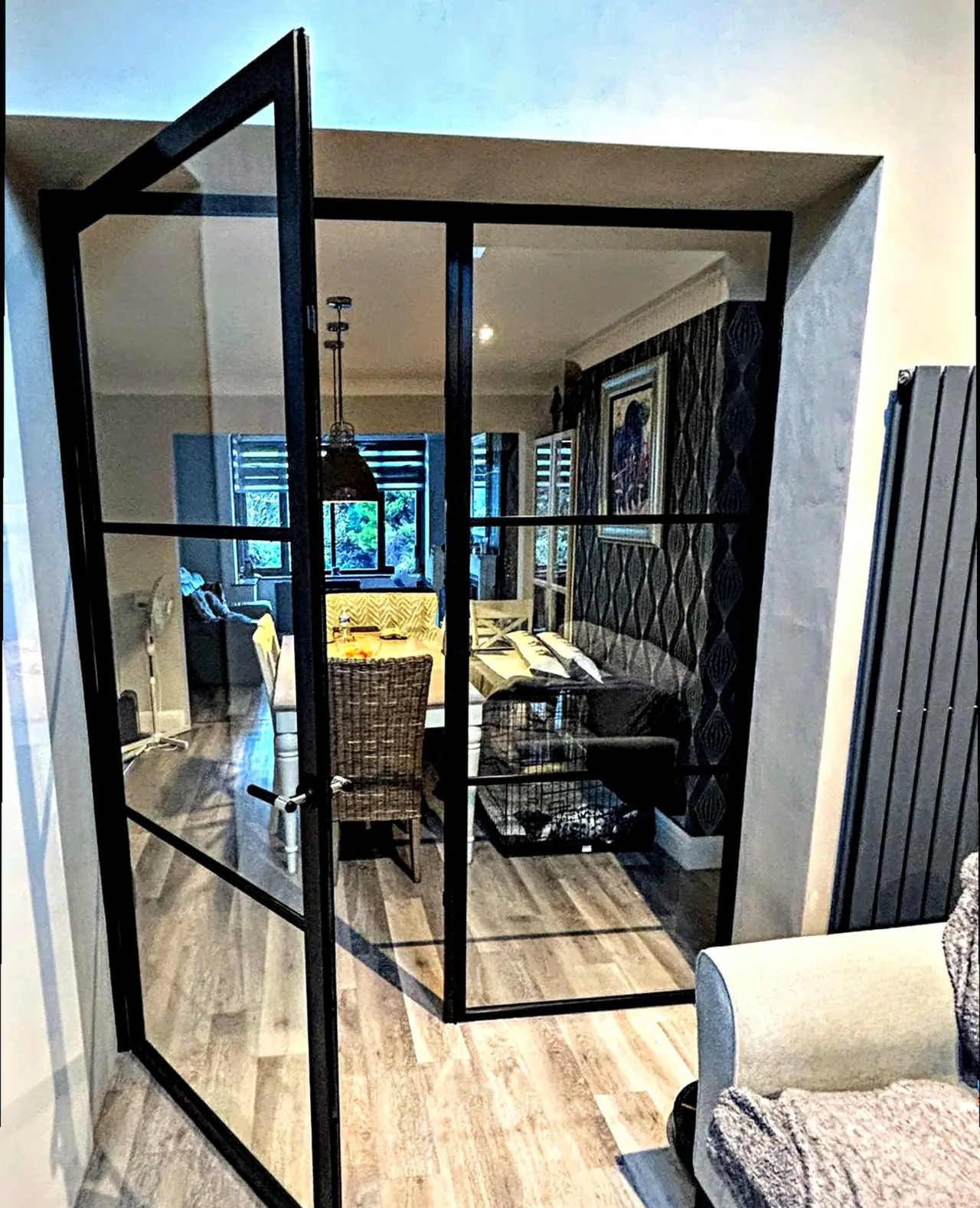
Where the demand is coming from
Steel-look internal doors began as a high-end residential look and have moved into mainstream specification. Three jobs drive most of the enquiries now: open-plan reconfigurations that need a glazed divide without losing light, period properties after a Crittall-style aesthetic, and commercial fit-outs splitting floorplates into meeting rooms and breakout zones.
Enquiries have shifted from one-off feature pieces to multi-door packages. Builders and joiners are pricing single and double leaf sets, fixed sidelights and full glazed partition runs off one slim sightline. Our steel-look internal doors sit in that bracket: thermally broken aluminium framing, narrow profiles, single or double glazed depending on the application.
- Open-plan kitchen and living splits that keep sightlines and borrowed light
- Hallway and study screens in period and new-build housing
- Office, studio and retail partitioning for acoustic and visual separation
Why aluminium over actual steel
The look sells, but the material decides the margin. Aluminium gives the slim black sightline buyers want without the weight, corrosion risk and lead times of fabricated steel. Powder-coated frames hold their finish, and the lighter sections are quicker to handle on site, which keeps fix times down.
Aluminium also carries a factory finish across a project where the powder-coat batch is matched. Specify the internal screens alongside external aluminium glazing and the building reads as one system. For schemes already running aluminium sliding doors or curtain walling, the steel-look range carries the same colour and detailing inside.
Spec points that protect the order
Glazing is the main variable. Internal screens at low level or in door leaves usually fall in critical locations that call for safety glazing, so confirm where toughened or laminated glass is required before you quote the glass spec. Agree it in writing with the specifier.
Settle single versus double glazing early. Single glazing keeps sightlines at their slimmest and suits a purely visual or light-borrowing divide. Double glazing adds weight and cost but gives acoustic separation, which matters for studies, offices and bedrooms off open-plan space.
Hardware and swing direction drive the rest. Confirm handing, hinge type, latch or lock requirement and any flush-bolt for double-leaf sets at survey. Retro-fitting ironmongery on a slim aluminium section is awkward and visible.
How to price the trend without overcommitting
Treat steel-look internals as a configurable system, not a fixed catalogue item. Quote per leaf and per linear metre of screen, then add glazing upgrades and hardware as line items so the customer sees what each choice costs. That holds a competitive headline price while protecting margin on the extras.
Lead with what the trade buyer is judging: sightline width, finish durability, glazing options and survey-to-fit turnaround. We supply to the trade only and route homeowner enquiries to vetted installers, so your quote stays your quote. Send drawings or a site list through our quote page and we will price the package against your programme. Homeowners reading this should use find an installer to reach a vetted fitter.