
Sound reduction is set by the glass, not the frame
Most of the acoustic gain in a window comes from the insulated glass unit, so the spec sheet matters more than the marketing. Performance is quoted as an Rw rating in decibels, usually with two correction figures: C for general airborne noise and Ctr for low-frequency traffic. Traffic, plant and aircraft sit at the low end, so read the Ctr figure, not just the headline Rw.
A standard 4-16-4 double-glazed unit lands around the low 30s dB Rw. Move to an asymmetric build with an acoustic laminated pane and the figure climbs into the high 30s and low 40s. Symmetry is the enemy here, because two panes of the same thickness resonate at the same frequency and let it through.
Match the glass to the problem before you price the frame. A road-facing elevation needs a different unit from a quiet garden side, and over-specifying every opening wastes money.
Asymmetric panes and laminated interlayers
The two levers that move the number are pane asymmetry and a laminated acoustic interlayer. Different glass thicknesses on each face shift the resonant frequencies apart, so noise that passes the outer pane is caught by the inner one. A 6mm outer with a 4mm inner is a common starting point.
Acoustic laminated glass uses a PVB interlayer that damps vibration rather than just adding mass. Common acoustic laminates run at 6.8mm, 8.8mm and 10.8mm, and the thicker the interlayer build, the better the low-frequency control. Specify it on the noisiest pane and you target the worst frequencies without glazing the whole house in it.
Cavity width helps too, but only to a point in a sealed unit. Past roughly 16mm to 20mm the thermal and acoustic gains flatten, so chasing a wider cavity alone rarely justifies the cost. The same unit carries the thermal performance, so balance both when you choose the build.
Seals, frames and the weakest path
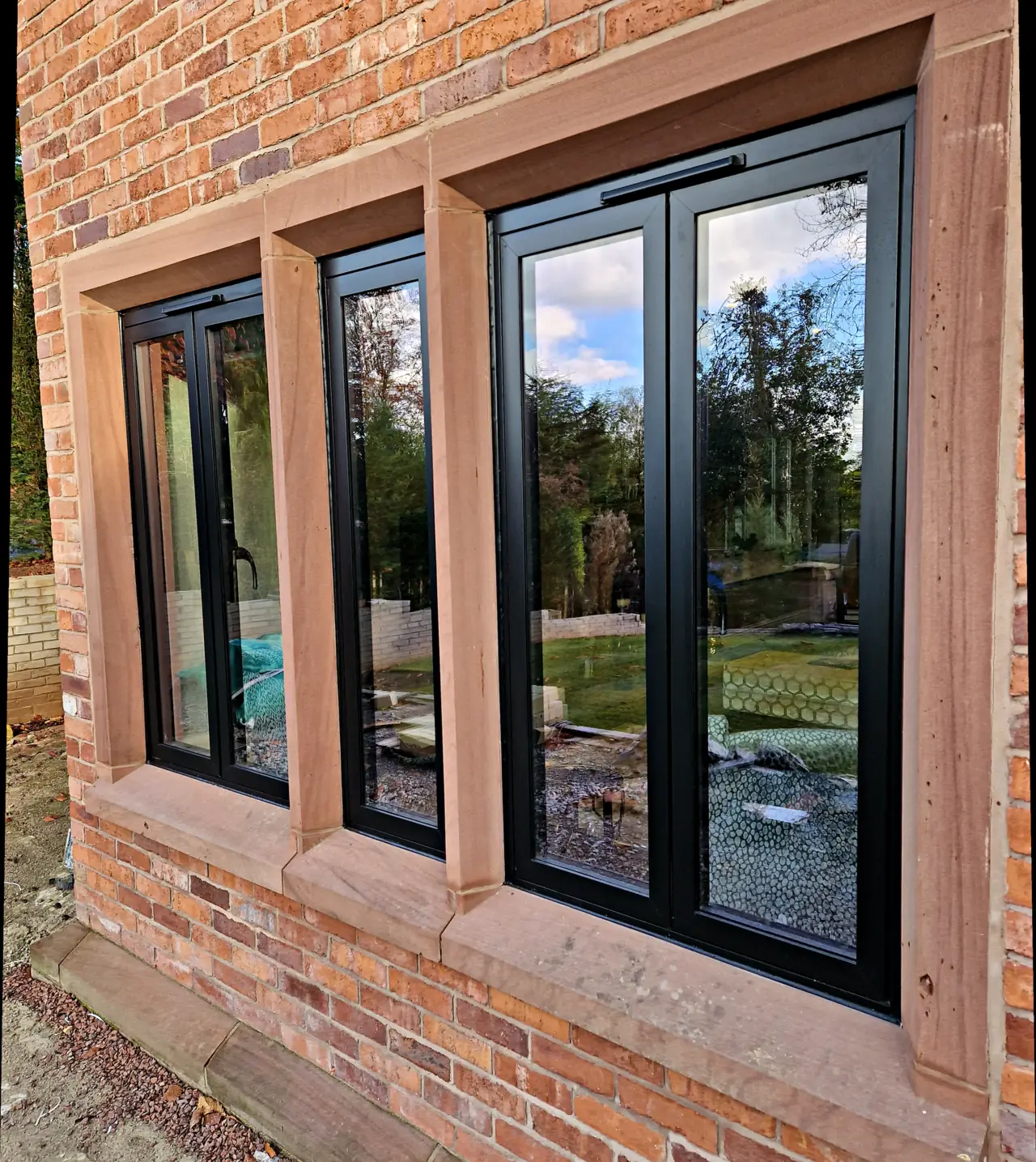
A 41dB unit in a leaky frame performs like a 30dB one. Sound follows the same gaps as draughts, so a continuous compression seal and a frame that closes evenly are doing acoustic work as well as weather work. Our aluminium casement windows and tilt and turn windows use multi-point locking to pull the sash hard onto the gasket.
Check the flanking paths once the window is right. Letterplates, old vents, gaps around the reveal and a hollow cavity wall will all leak noise around a good unit. Seal the installation as carefully as you spec the glass.
Aluminium frames hold tight tolerances and stay square, which keeps the seal line even over the life of the window. That consistency is part of the acoustic result, not just the look.
Ventilation and Building Regulations
Sealing a room tighter raises a ventilation question. Under Approved Document F, replacement windows generally should not leave background ventilation worse than before, which is why many replacements arrive with trickle vents. A vent is an air path, so it is also a noise path.
Acoustic trickle vents exist and carry their own attenuation rating, so where a vent is required on a noisy elevation, specify the acoustic version rather than a standard one. Where an alternative compliant ventilation route already exists, the window may not need a vent at all. Confirm the route with your building control body before you order.
Treat ventilation as part of the acoustic design from the start. Retrofitting a vent into a finished install undoes part of the gain you paid for.
Spec it once, with the right help
Send us the elevation, the noise source and the opening sizes and we will quote the glass build and frame to suit. We support PAS 24 routes where specified, BS EN 14351-1 for windows and doors, and UKCA marking with DoP.
Trade buyers can price a job direct. Start a quote or call 0330 133 3622. Homeowners should use find an installer to reach a vetted fitter who works with our systems across North West England.