
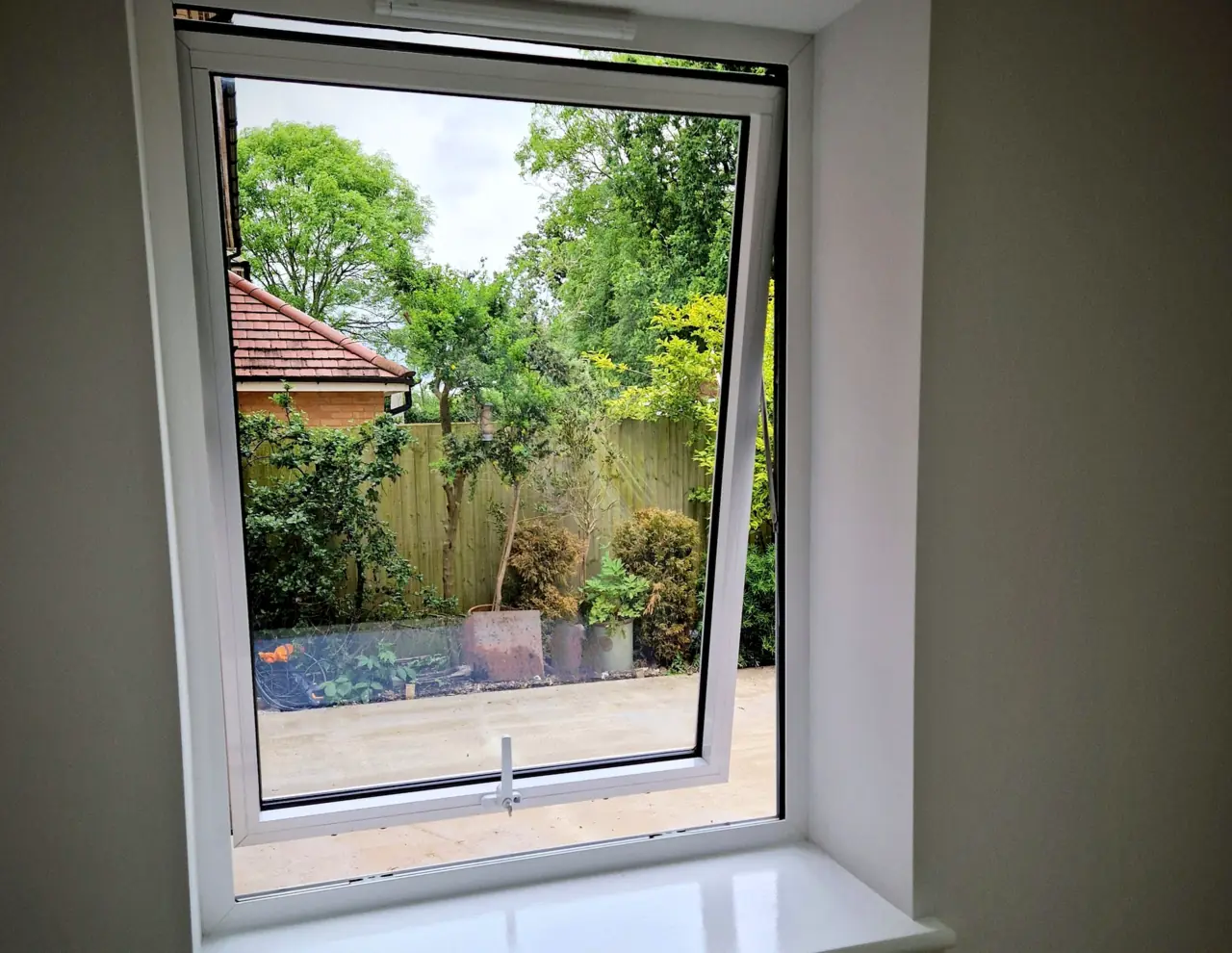
Condensation is water leaving the air, not coming through the frame
Condensation forms when warm, moisture-laden air meets a surface below its dew point. The water was already in the room. The cold surface just gives it somewhere to collect. A frame or glass edge is usually the coldest spot in a room, so it shows the problem first. That does not make it the cause.
Three numbers drive it: indoor humidity, surface temperature and air movement. A household puts several litres of water into the air a day from cooking, washing, drying and breathing. Add poor ventilation and a cold surface and that water condenses. The window shows the symptom, not the source.
Before you condemn the glazing, find where the moisture comes from and whether the room can shift it. Most call-outs we see are humidity and ventilation faults, not failed units.
When the frame genuinely is at fault
There are two cases where the product is at fault. Condensation between the panes of a sealed unit means the unit has failed and the cavity seal has gone. That is a glazing fault and the unit needs replacing. Persistent water on the inner frame of an old, poorly insulated window points to cold bridging through the frame itself.
Modern thermally broken aluminium tackles the second case. A polyamide thermal break separates the inner and outer faces of the frame, so the internal surface runs warmer. In normal heated, ventilated use it stays above dew point. Our aluminium casement windows and tilt and turn windows are tested to BS EN 14351-1.
Condensation on the outside of the glass on a clear morning is the opposite signal. It means the unit is insulating well and the outer pane is staying cold. That is performance, not a defect.
Ventilation is where most of it is fixed
Replacement windows tighten a building. Approved Document F requires that ventilation after the work is no worse than before. If the old windows had trickle vents, the replacements need them too, sized to at least the same equivalent area.
Guidance sets indicative background ventilator equivalent areas by room type, with larger provision for habitable rooms than for kitchens, utility rooms and bathrooms. Treat any specific figure as indicative only and confirm it against the edition of Approved Document F in force when the work is done. Extract fans in wet rooms, and not drying washing on radiators, do more for condensation than any frame upgrade.
Trickle vents, background ventilators and humidity-controlled extract all move moist air out before it reaches a cold surface. Get the ventilation right first.
A sensible order of work
Work cheapest first. Behaviour and ventilation fixes cost little and clear most cases. Replacement earns its place when sealed units have failed or frames are thermally poor.
See energy efficiency for how thermal breaks and glazing specs work together on surface temperature. Trade buyers can send a spec to us for a quote. Homeowners should find an installer to assess and fit.
- Measure humidity. A cheap hygrometer tells you if the room sits above 60 per cent relative humidity.
- Check extract fans and trickle vents work and are not blinded by paint or tape.
- Inspect for condensation between panes, which confirms a failed sealed unit.
- Only then assess whether old, non-thermally-broken frames are cold bridging.
- Specify thermally broken units with correct trickle ventilation if replacement is justified.